We will meet again (2022/2024)
We will meet again began during my semester abroad in Vancouver and developed from an ongoing engagement with Mountain View Cemetery. Initially conceived as a field journal project, the work combines drawings, photographs, collected texts, and reflections developed through repeated visits to the cemetery.
The project explores the cemetery as a contradictory public space shaped by mourning, memory, ritual, and everyday activity. As a place where opposites meet, the cemetery exists between public and private space, presence and absence, life and transience.
I became particularly interested in the coexistence of different forms of use and behavior within the cemetery. While some people visit to mourn and remember the deceased, others use the space for walking, jogging, or everyday recreation. These overlaps create moments of tension, ambivalence, and absurdity.
The works focus on the symbolism of flowers as gestures of remembrance, as well as on gravestones and inscriptions as traces of personal stories, memory, and loss.
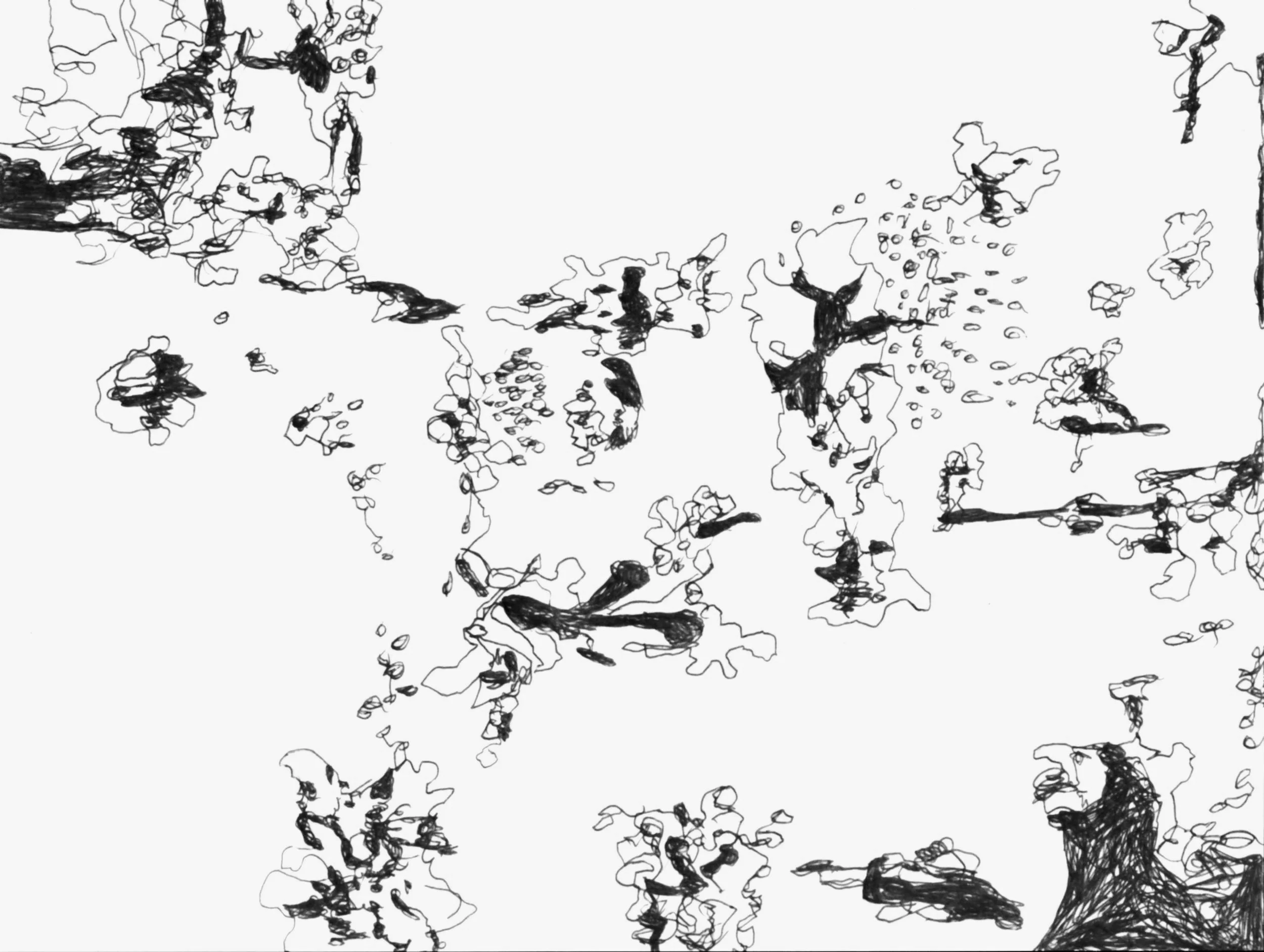
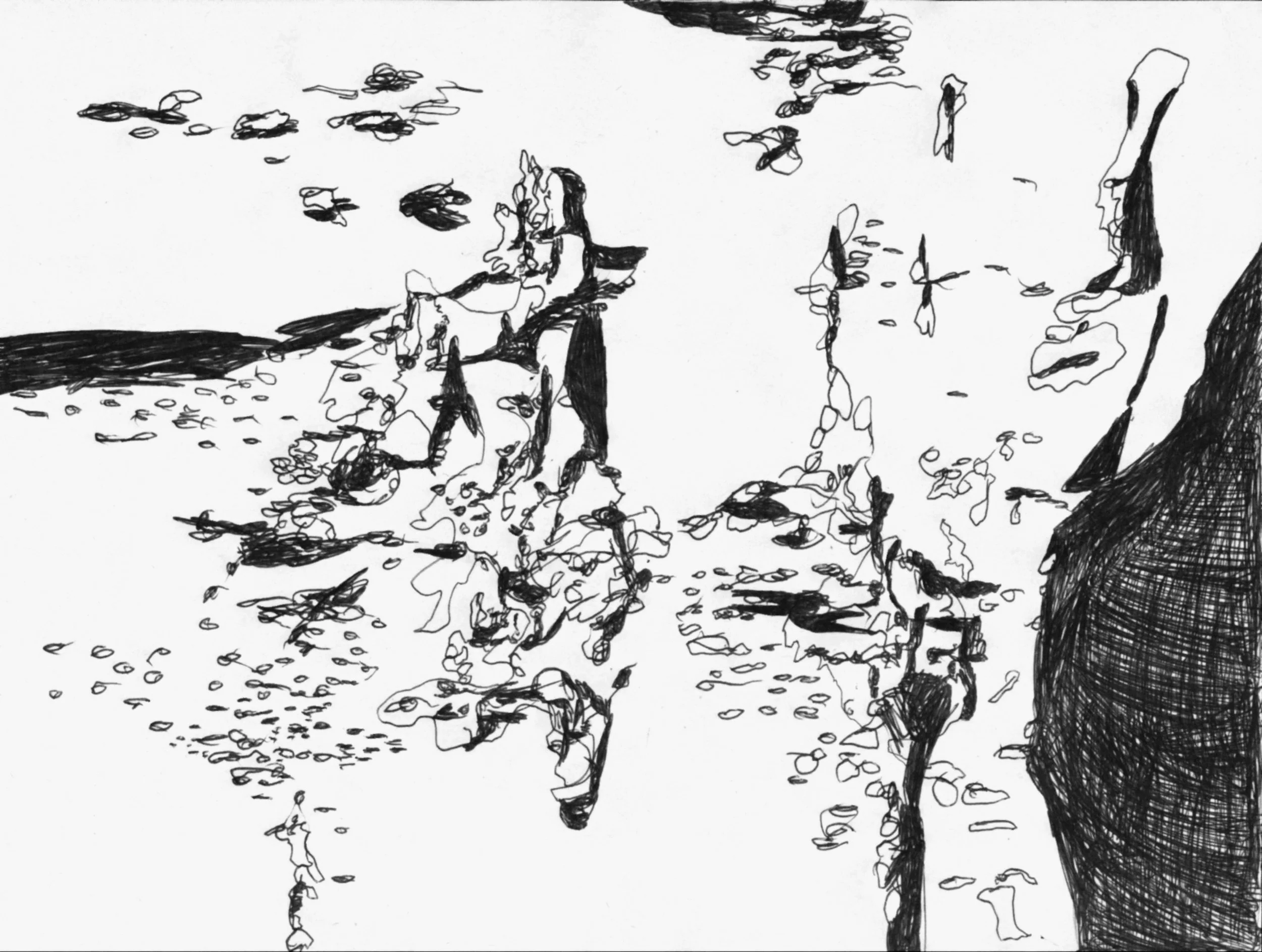
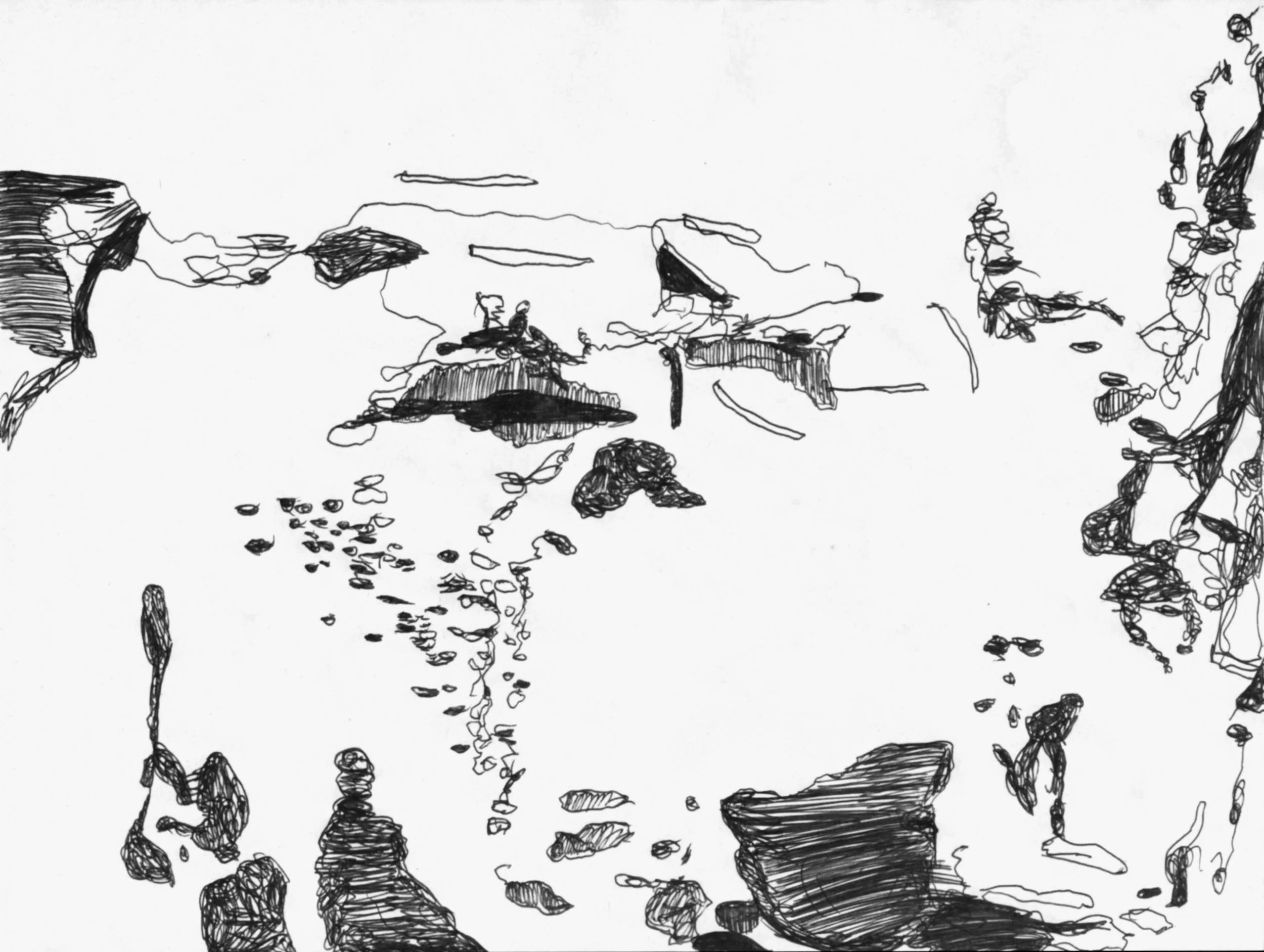
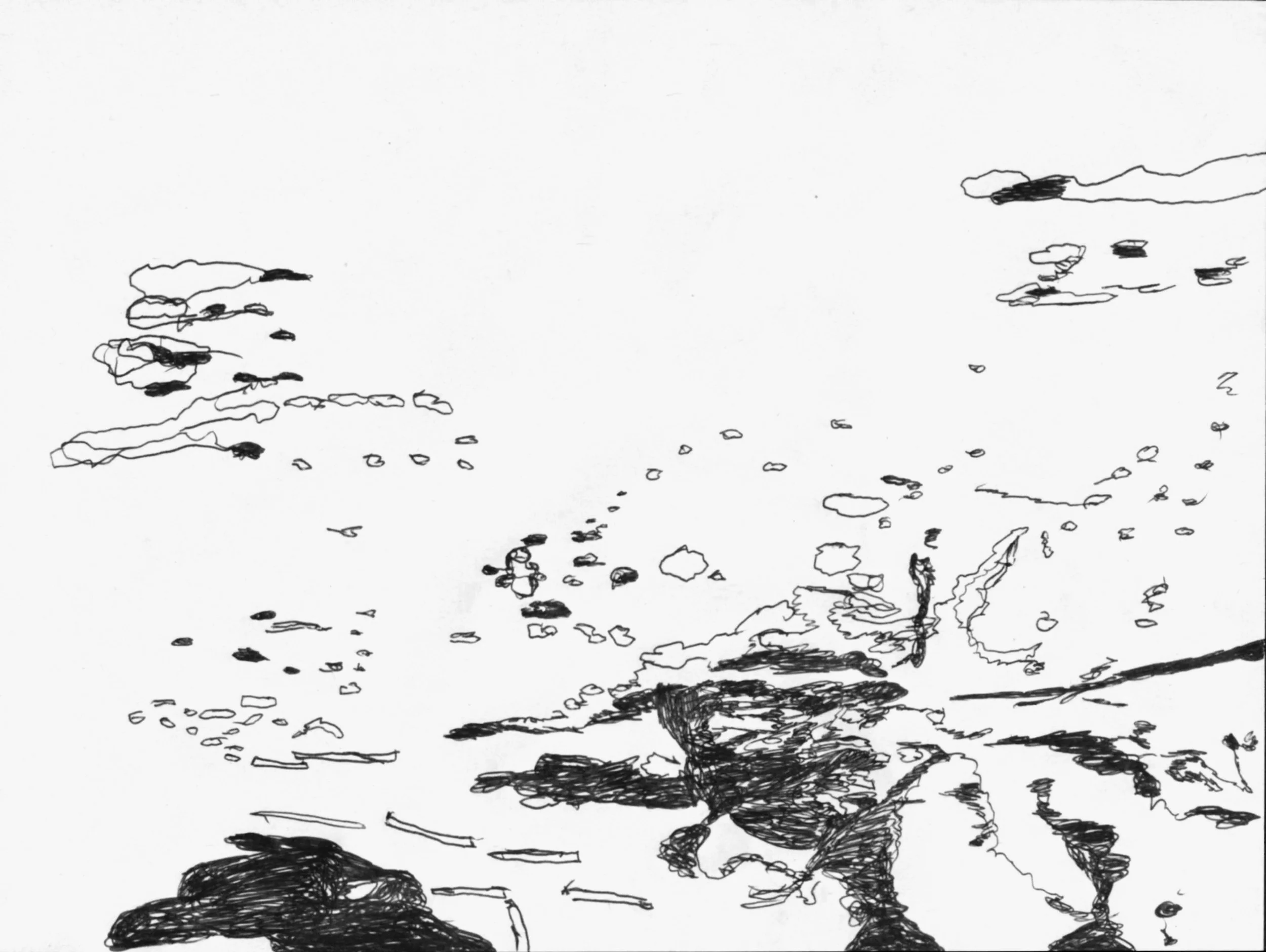
On Gravestones (2022/2024)
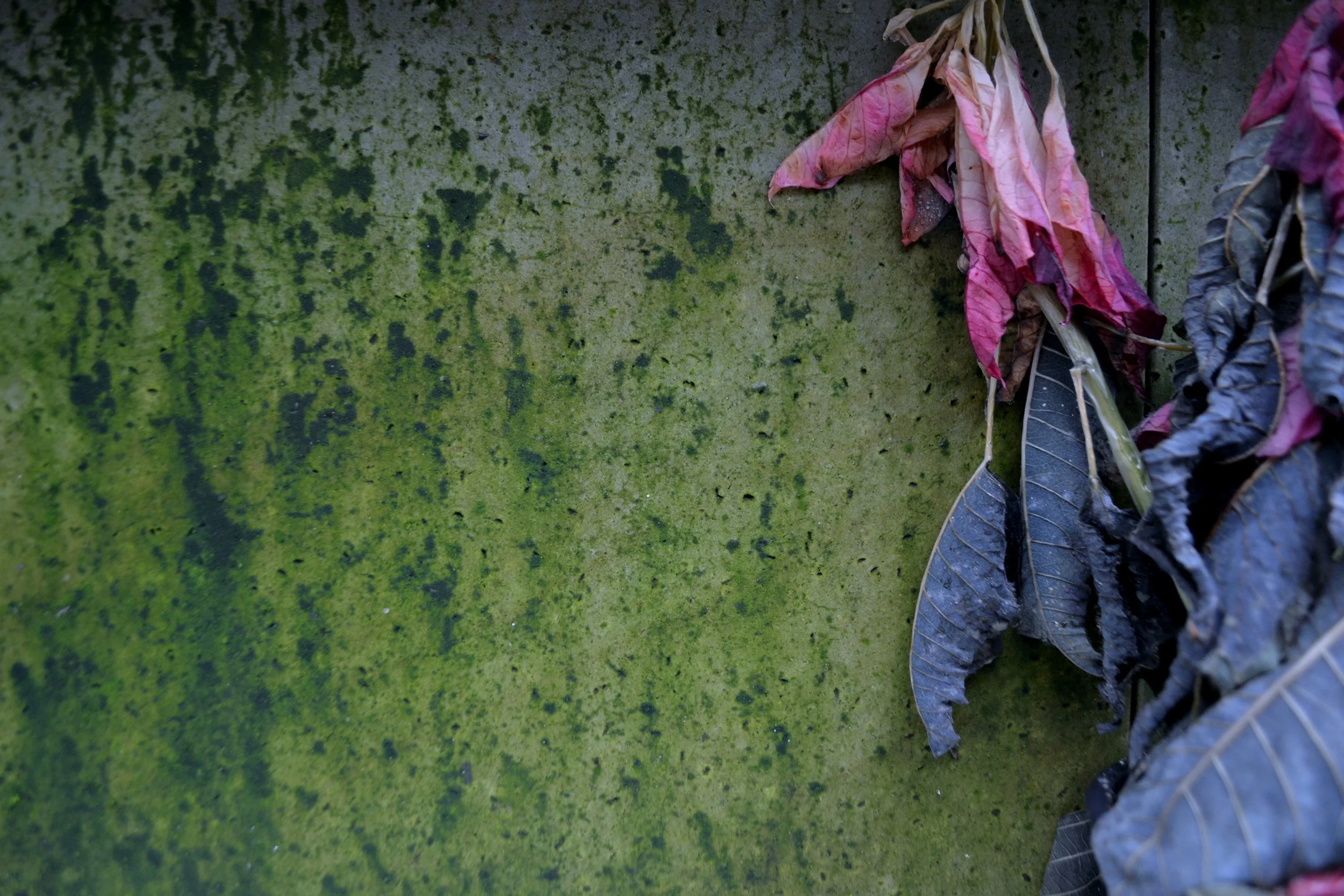
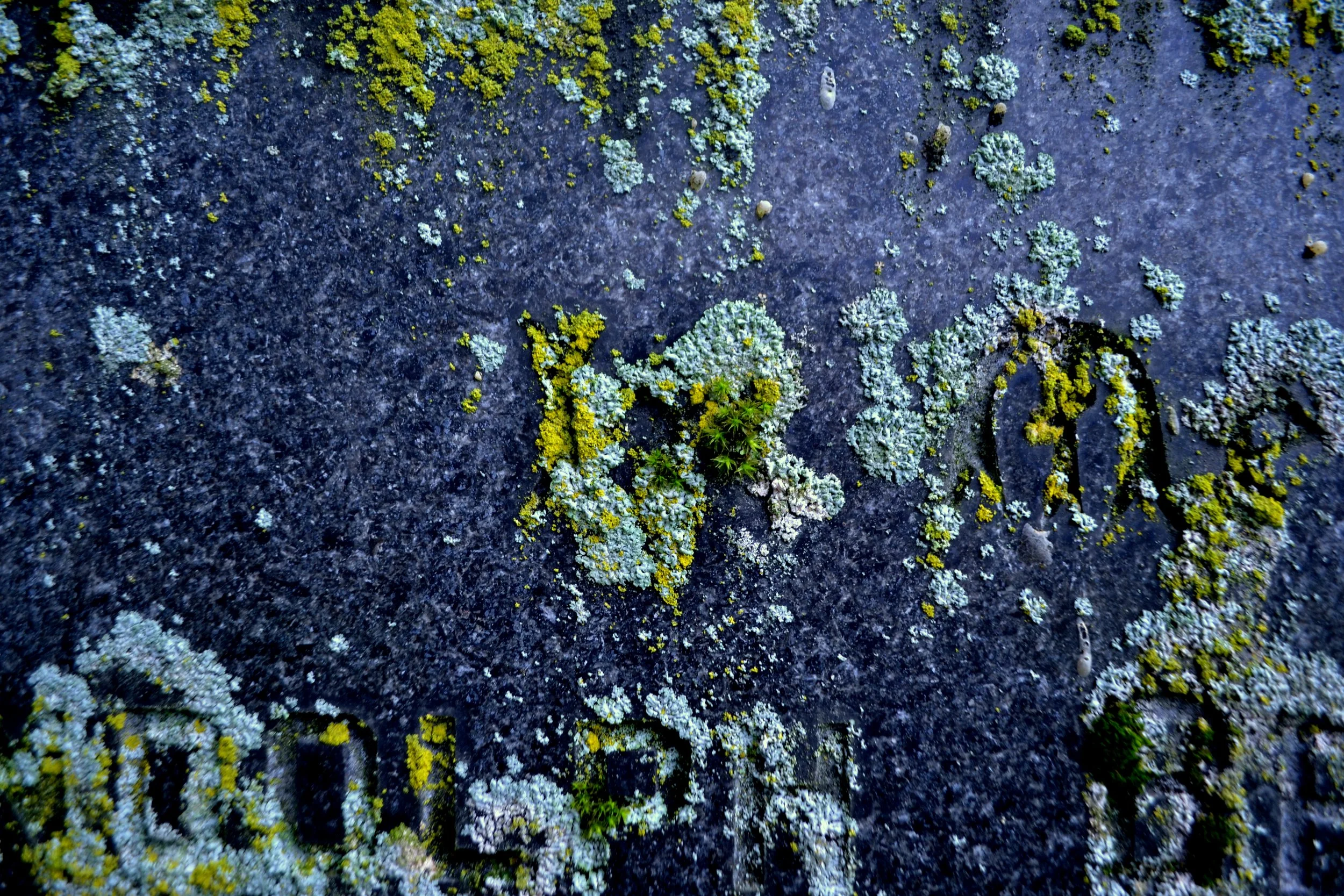
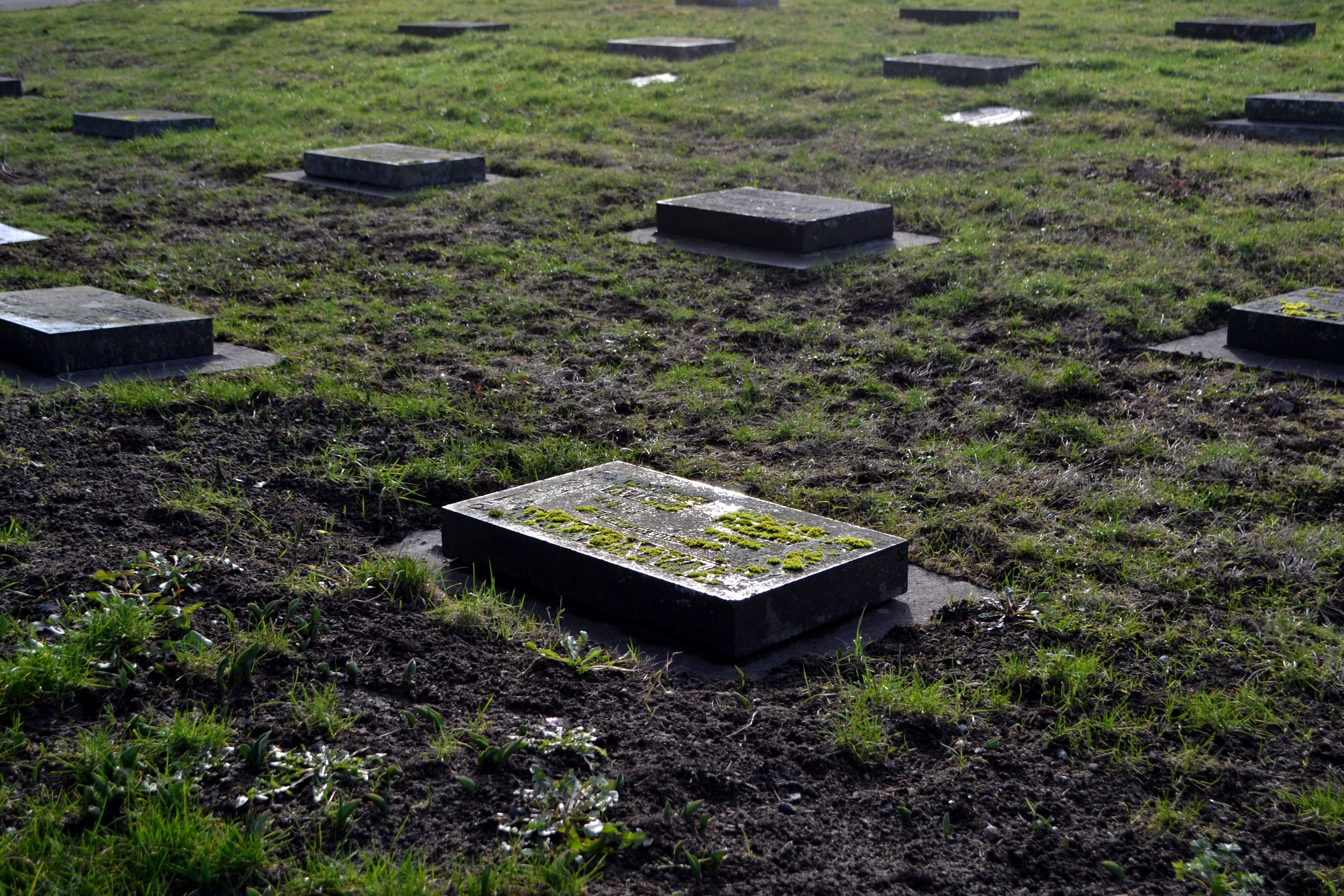
The drawings originate from close observations of moss growing on gravestones at Mountain View Cemetery. These organic surfaces appear as slow inscriptions of time, formed by moisture, decay, and repetition. By isolating these structures, the drawings translate them into abstract traces that shift between natural growth and visual pattern. They explore how memory can also exist outside language - embedded in surfaces, textures, and quiet accumulations.
Flowers die too (2022/2024)
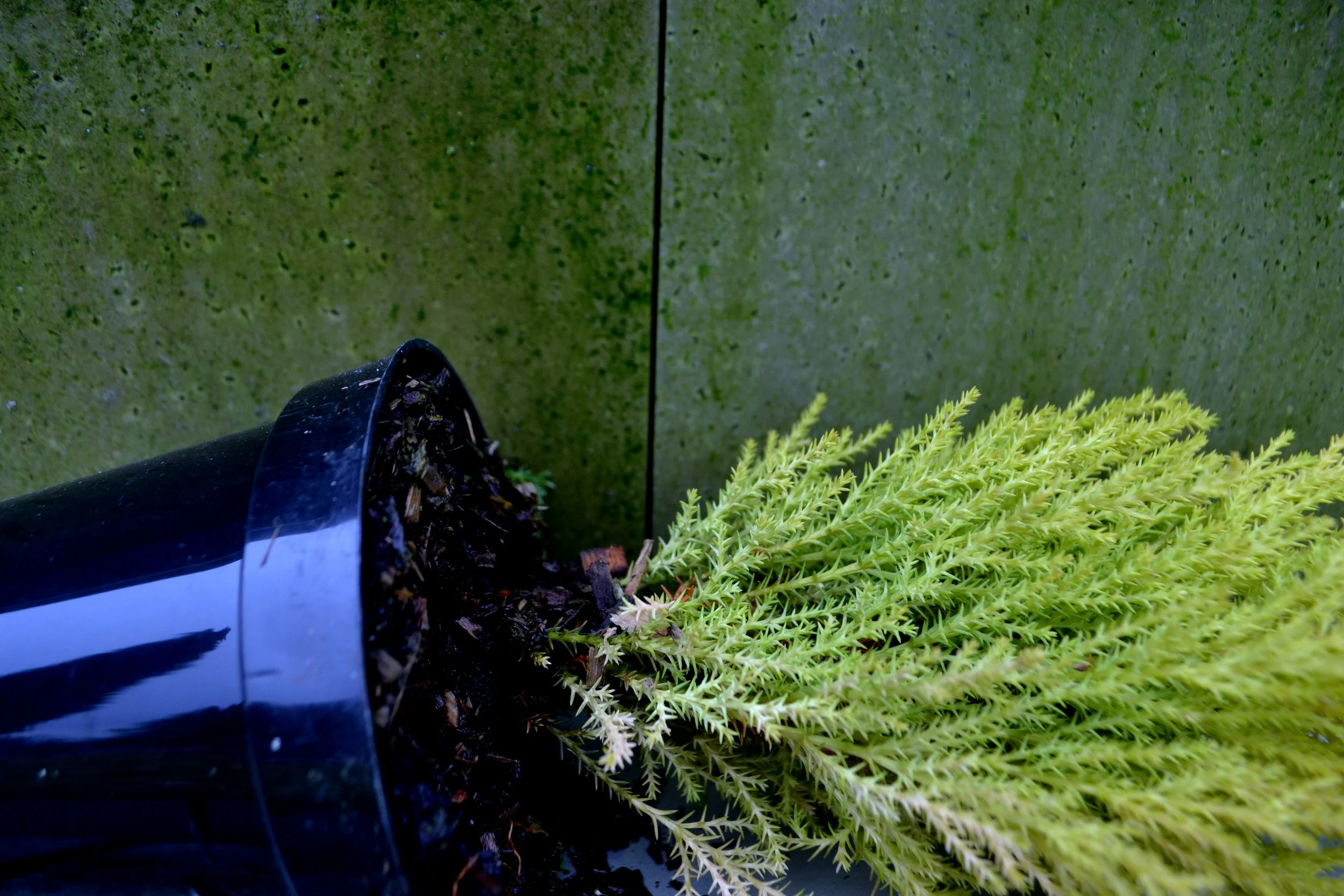
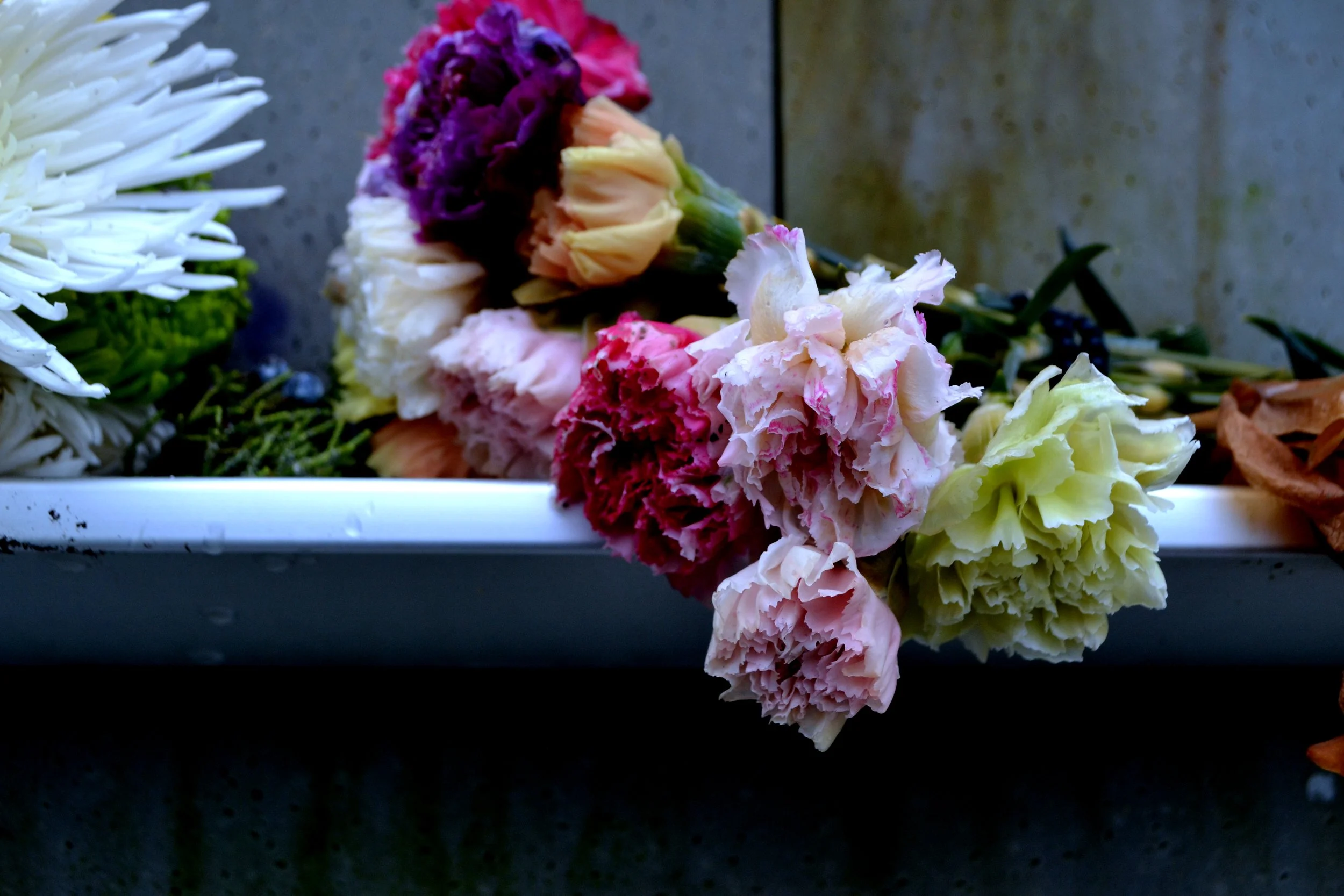
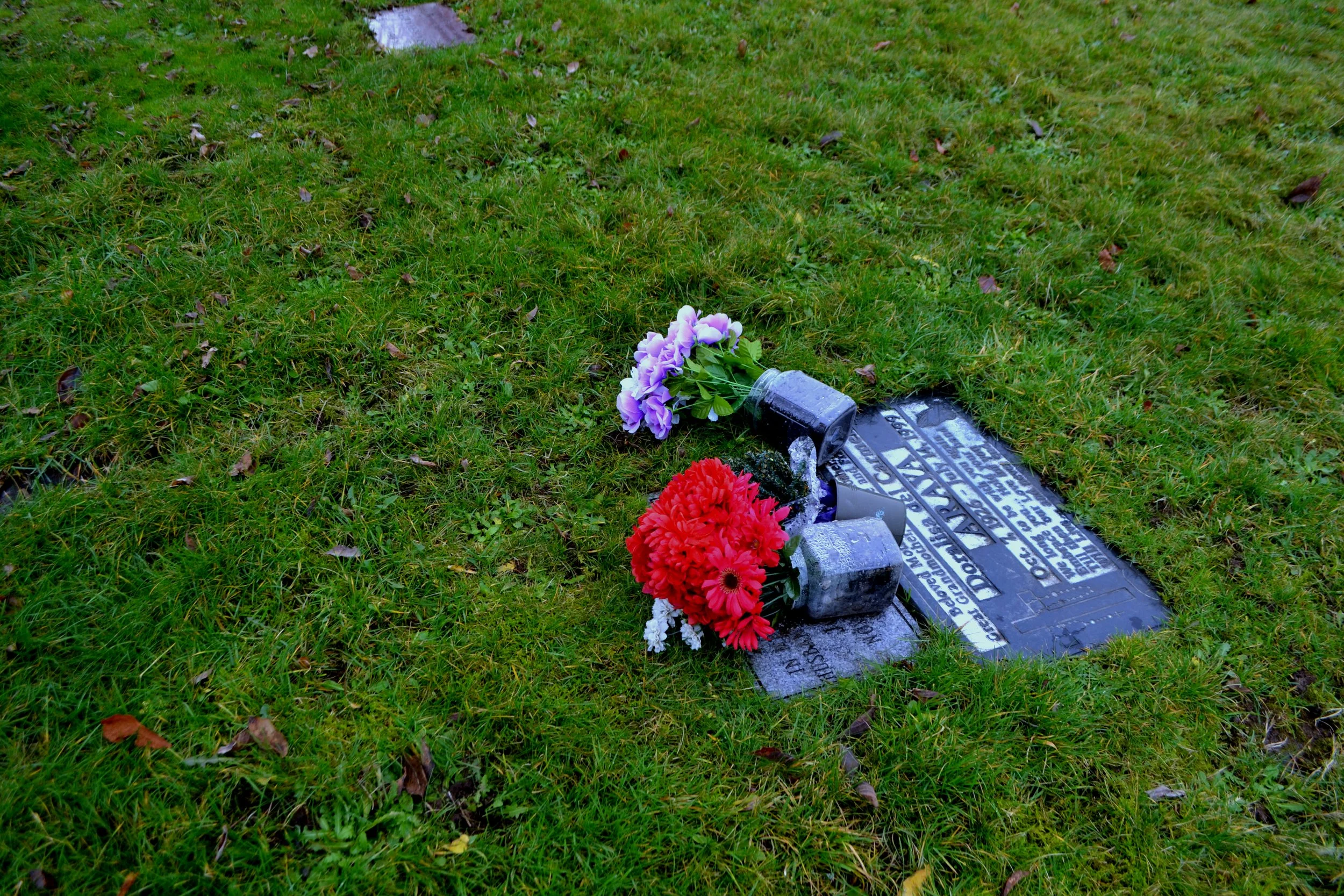
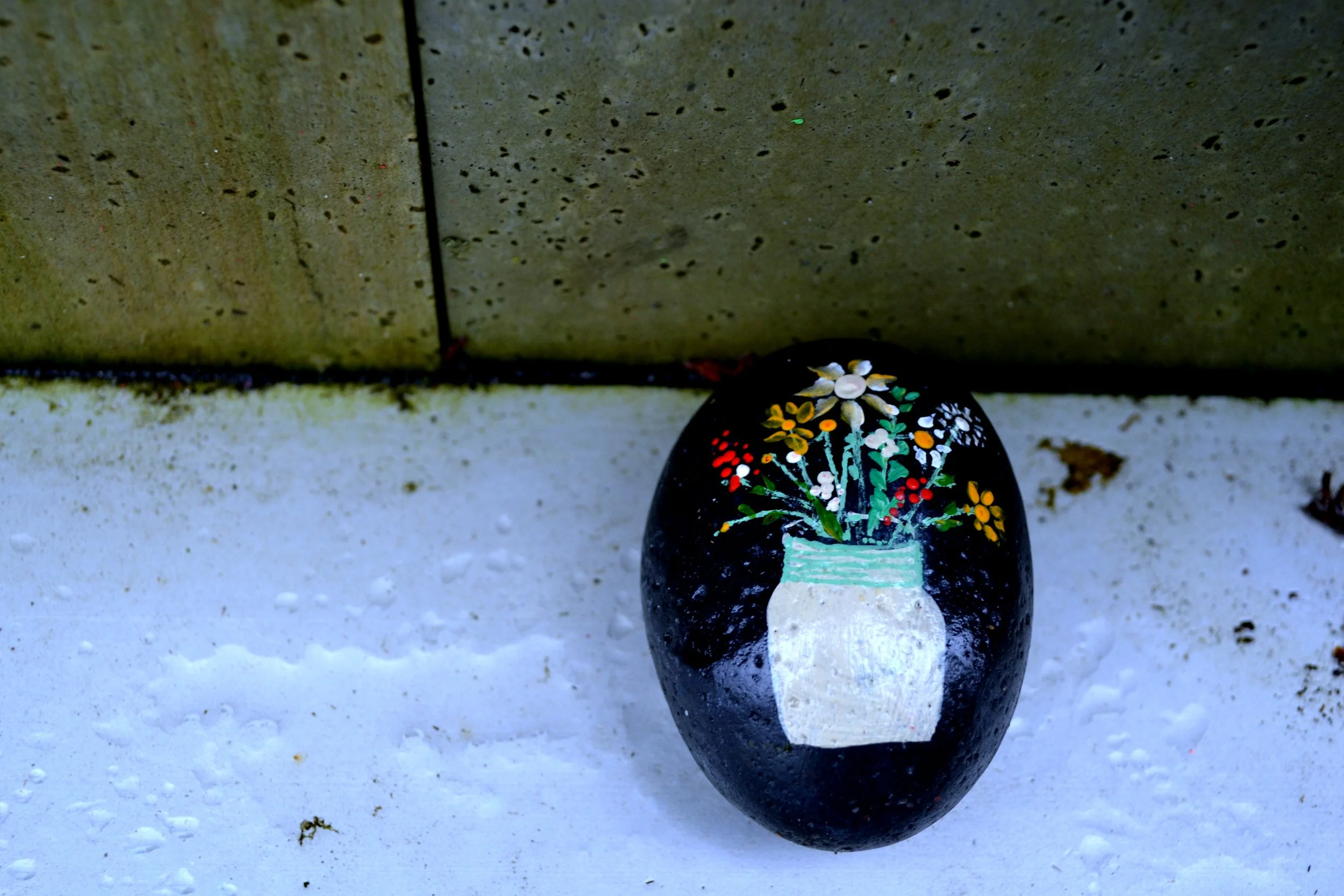
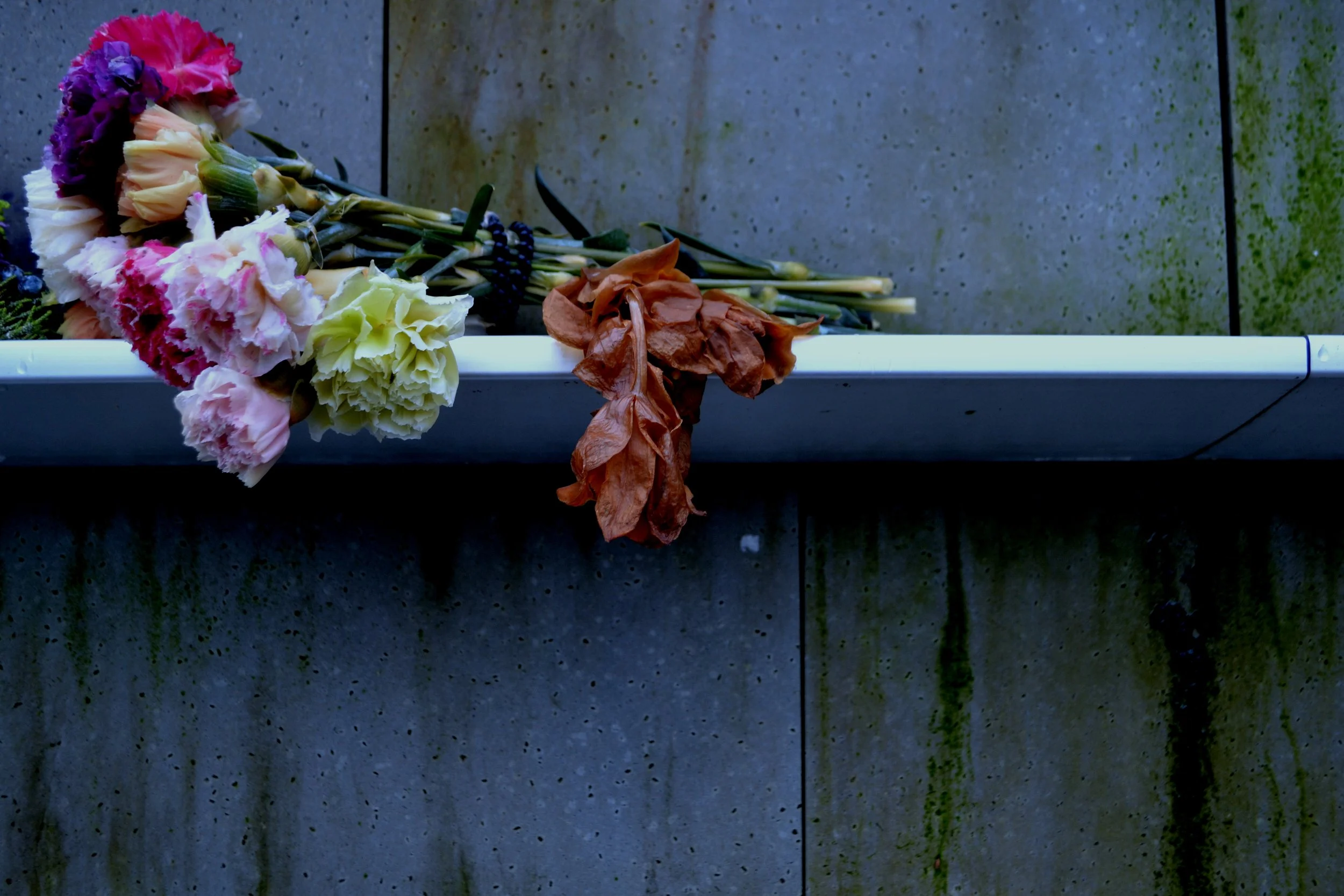
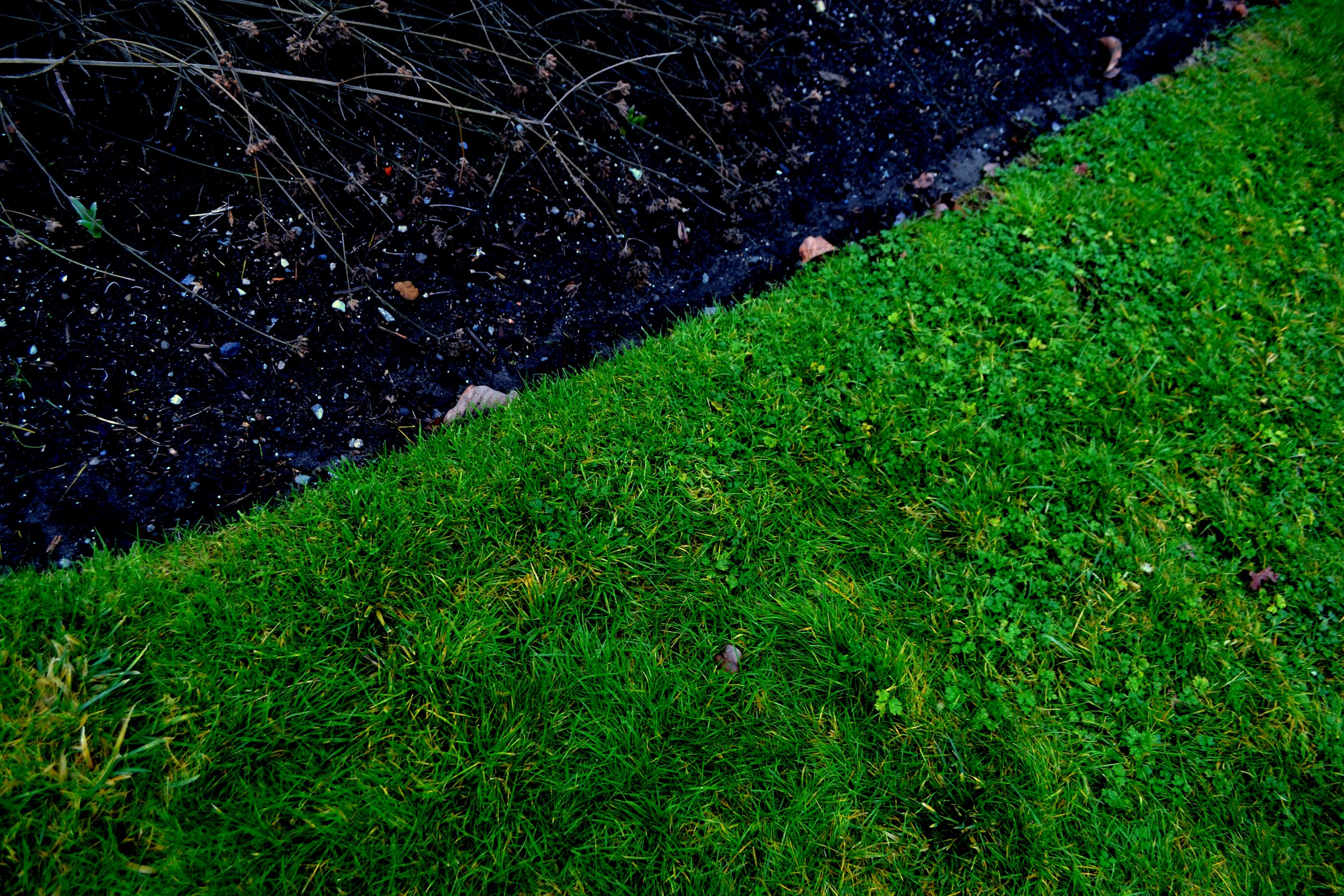
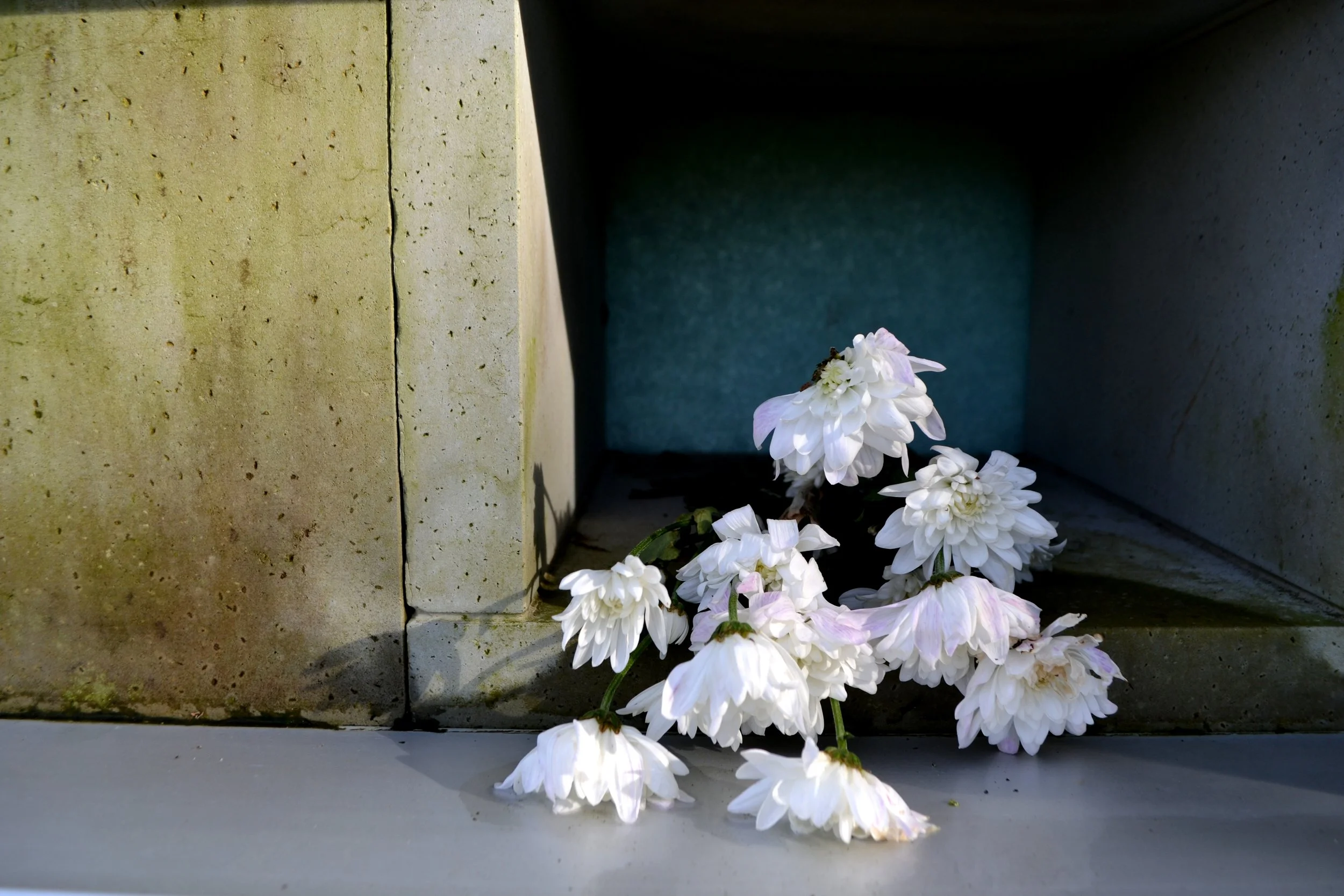
Flowers play an important role in the cemetery as gestures of remembrance and connection. In their presence, a paradox becomes visible: fresh flowers, wilted flowers, and artificial flowers exist side by side, all pointing toward different ideas of care, time, and permanence.
The photo series Flowers die too observes these arrangements as fragile compositions between life and decay, nature and imitation. Even as symbols of memory, flowers remain bound to the same processes of transience they are meant to resist.
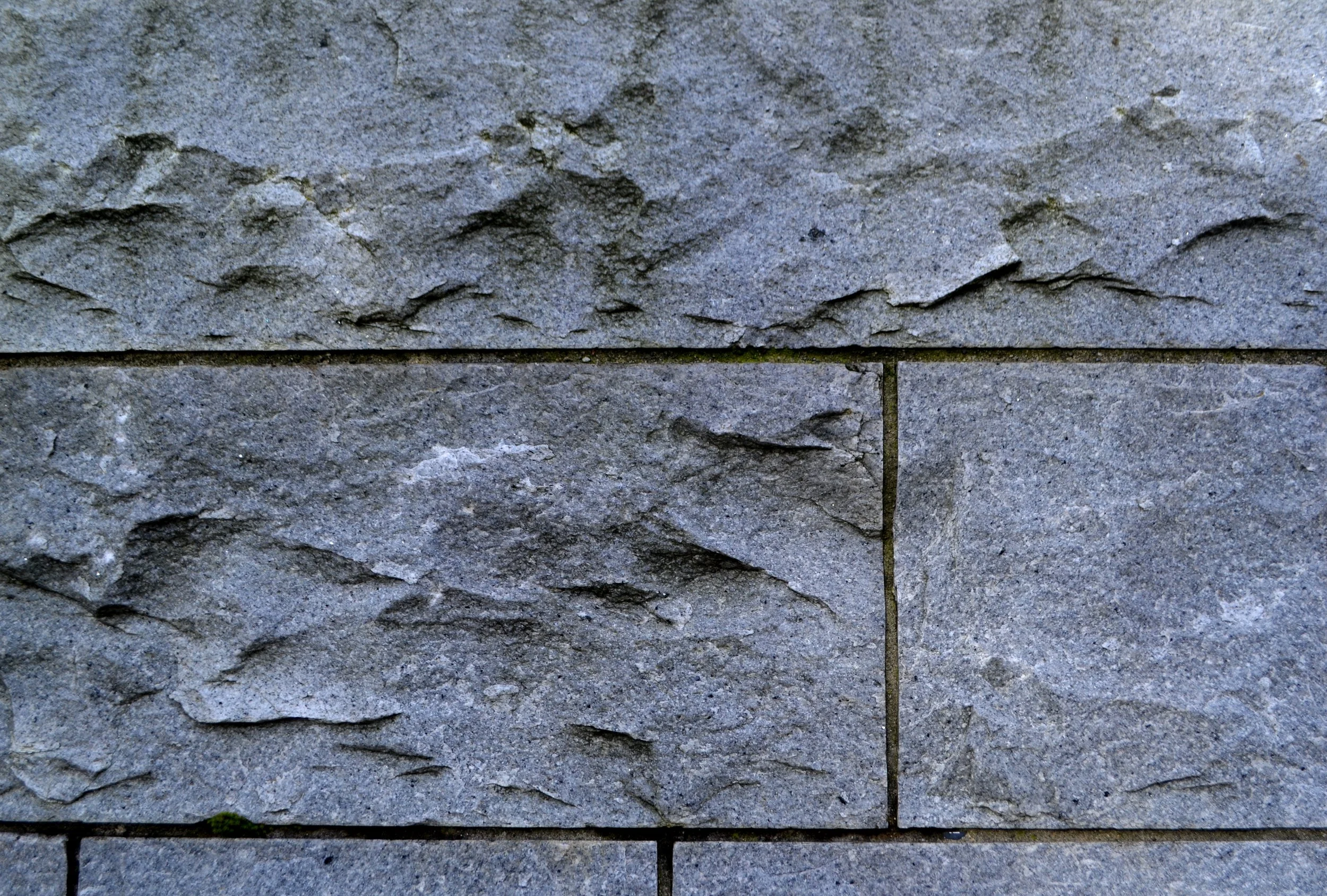
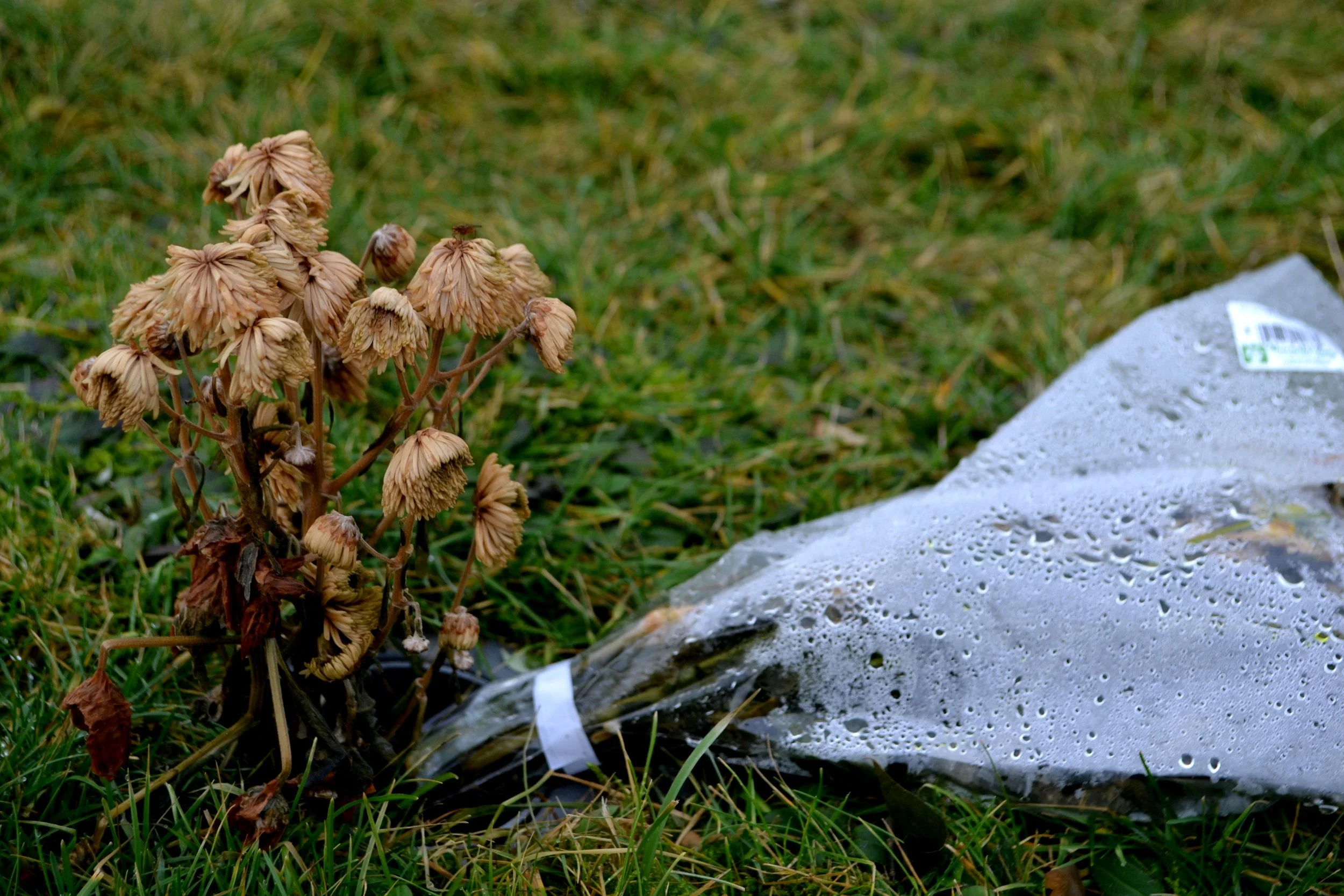
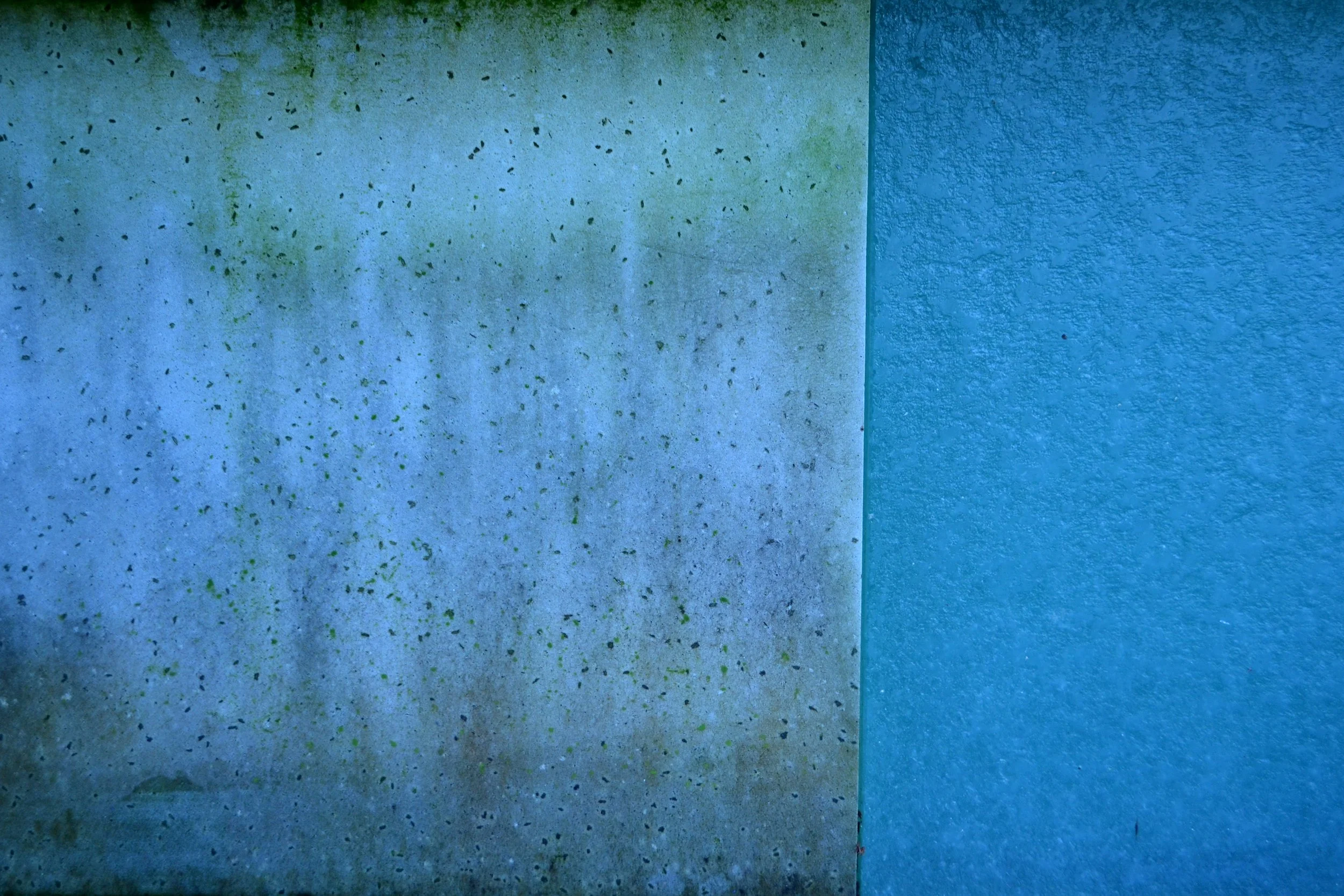
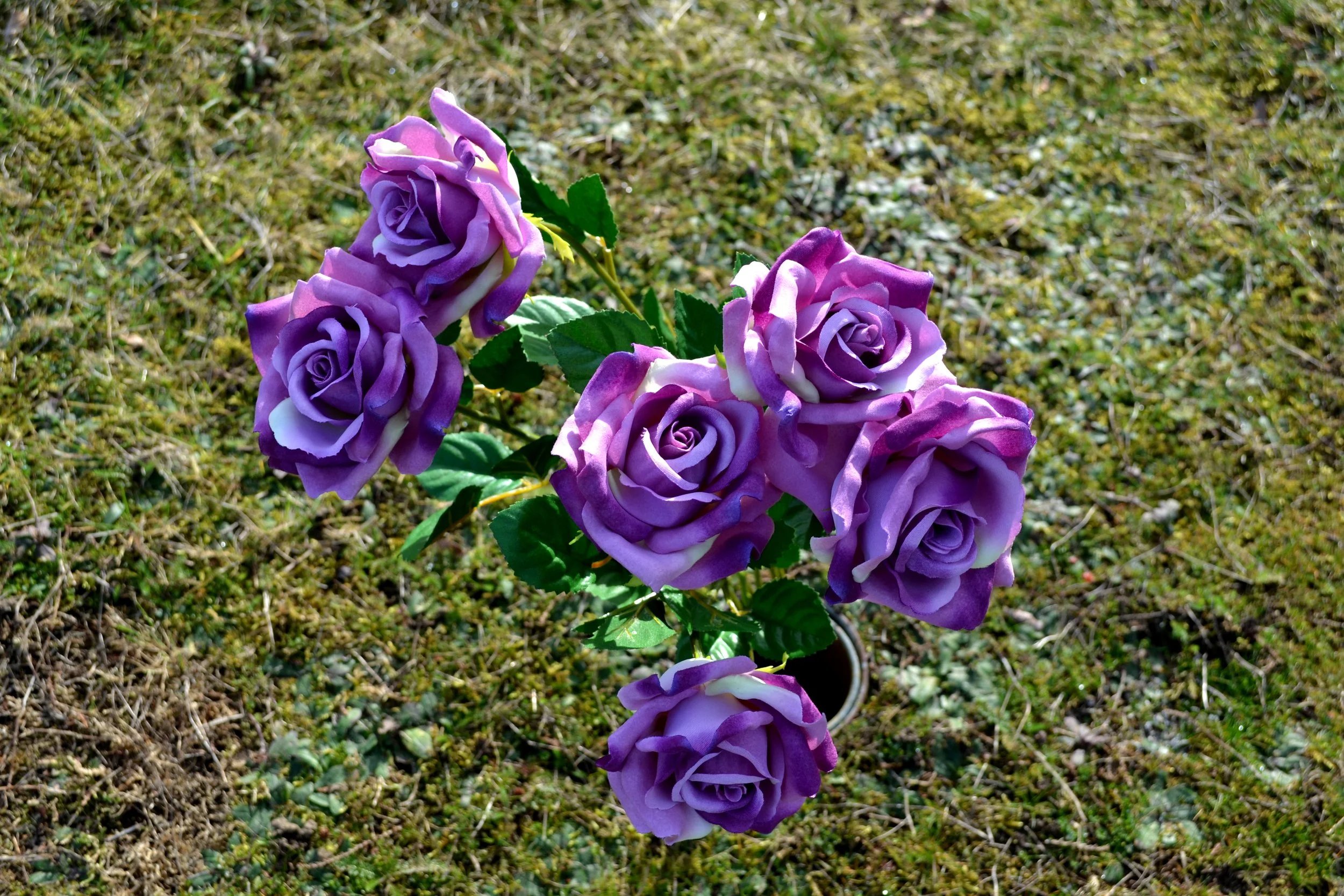
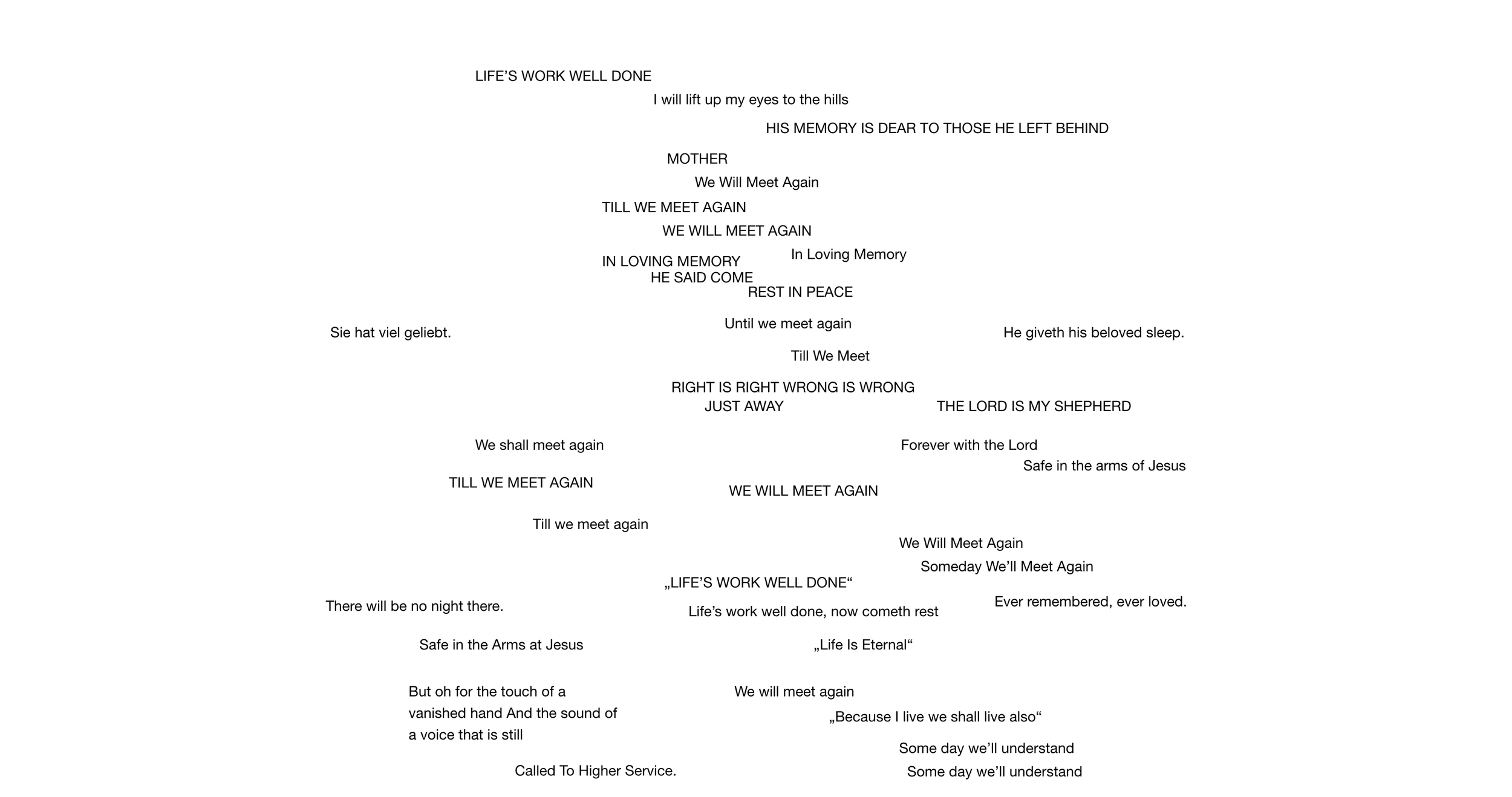
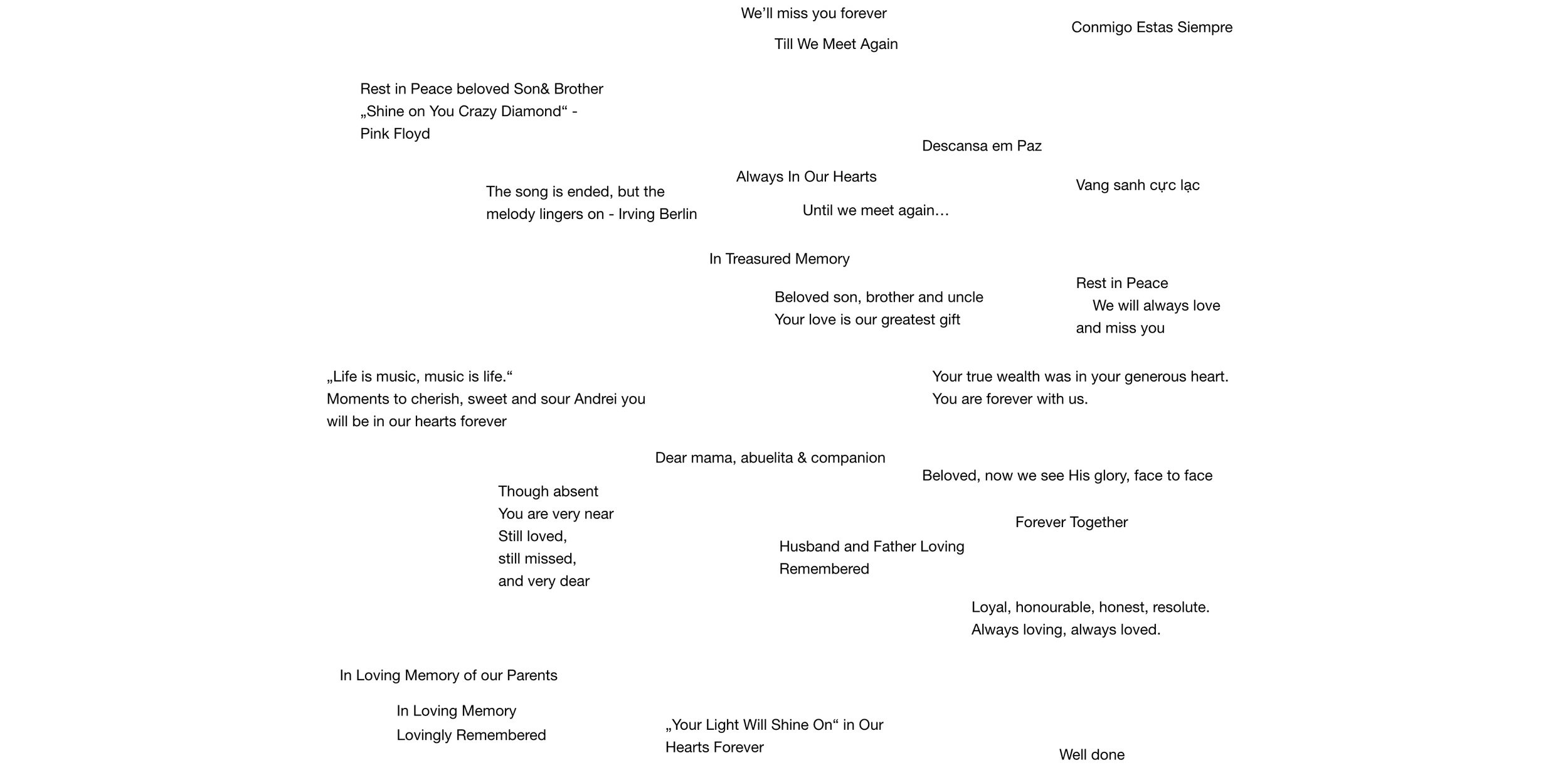
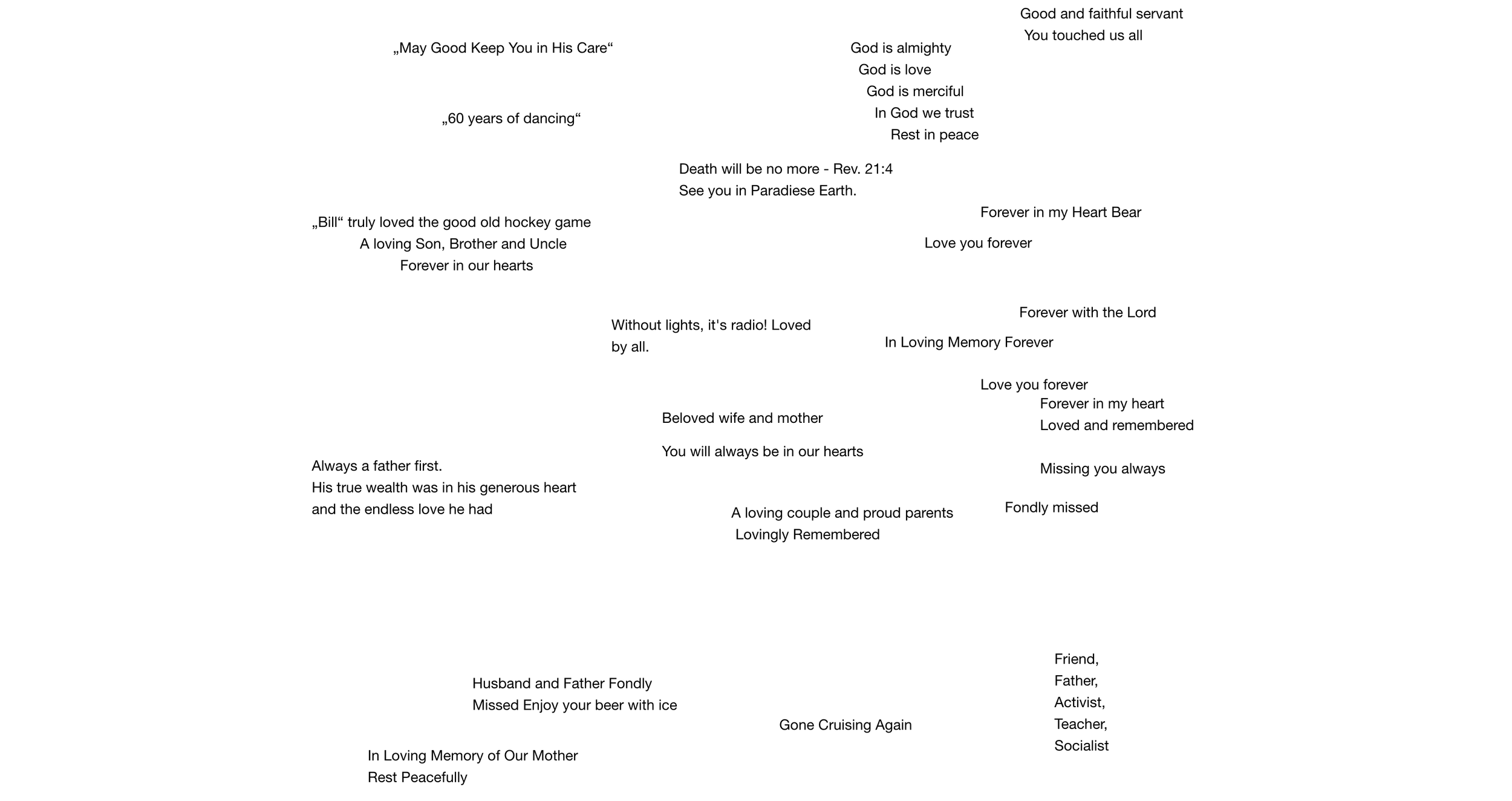
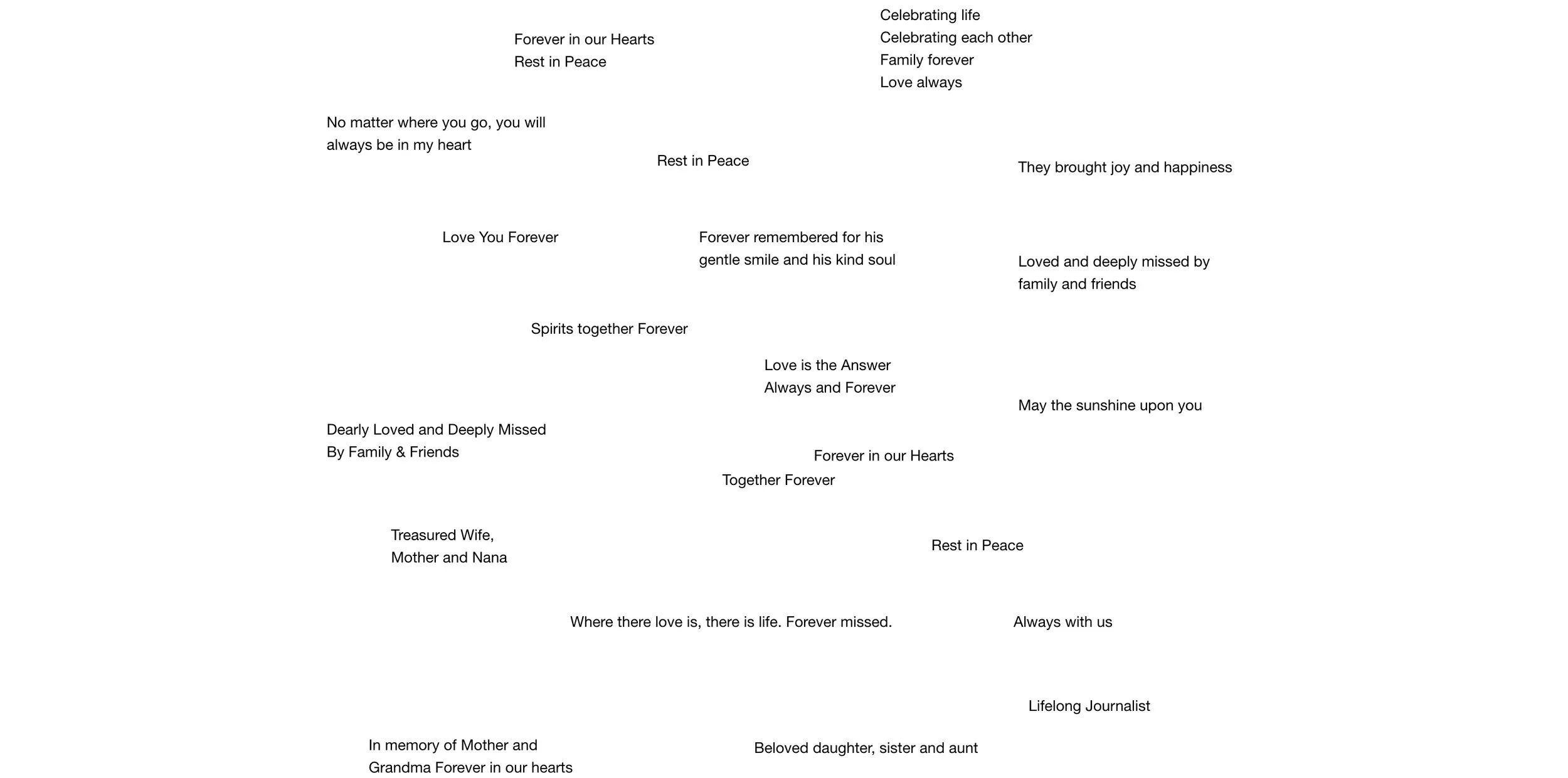
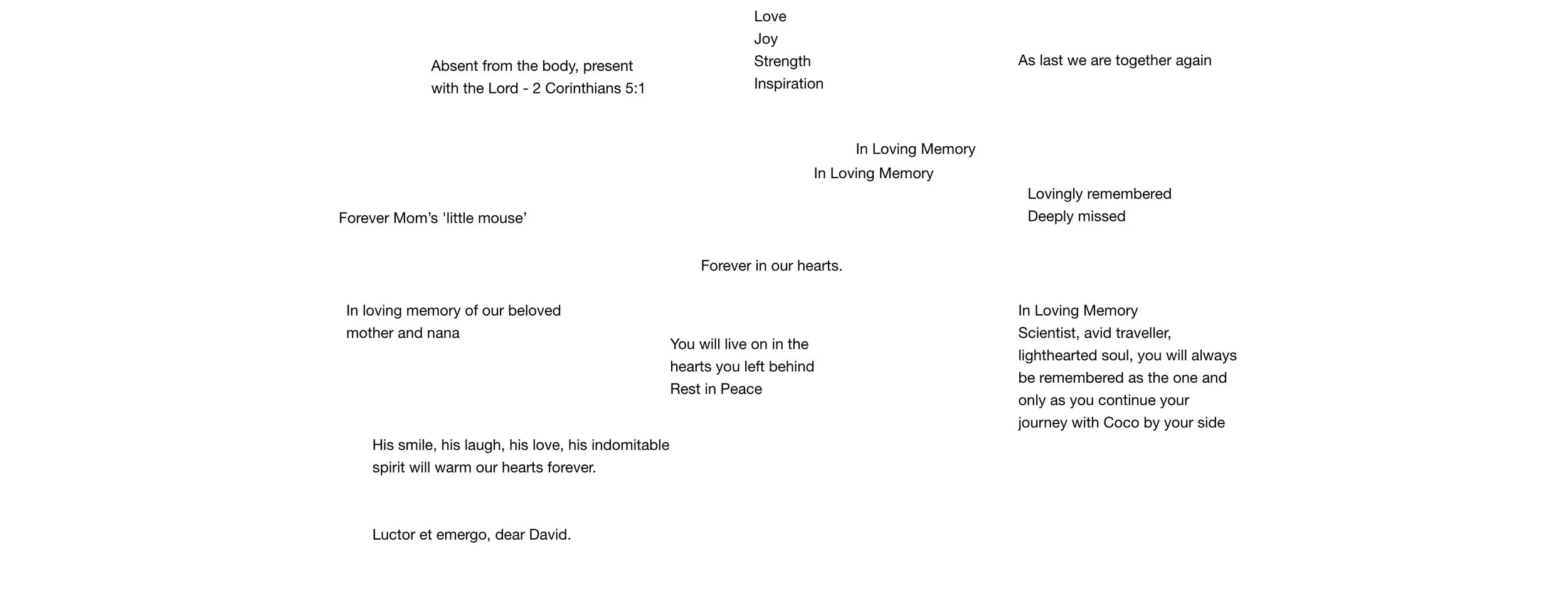

Until we meet again, 2022, visual poem consisting of collected epitaphs, size variable
Until we meet again (2022)
Until we meet again is a visual poem composed of collected gravestone inscriptions and fragments of text found within Mountain View Cemetery.
The work reflects on how language shapes memory and absence in public space. Epitaphs and brief messages become condensed forms of storytelling, carrying traces of individual lives while simultaneously dissolving into a collective landscape of remembrance. The piece moves between private grief and public visibility, assembling fragments that speak through omission as much as through what is written.
© Linh Lida Pham — All rights reserved.